
2026 · Historical account
TIGR: from customer requests to everyday teamwork
TIGR — Telegram Integrated Git Runner. Started in December 2025, this internal system connects customer requests, planning, task execution and reporting. In 2026 it became part of the team’s daily work.
In custom software development, defining a task and changing the code happen in different spaces. Customers need to describe problems, provide context and receive answers. Developers need to understand the task and modify the product. Managers need to see what has been accepted, where work is waiting and how delivery compares with the plan. TIGR was created to connect these activities and reduce time spent on manual coordination.
Development began in December 2025: the first commit is dated 11 December, and basic repository connections followed on 16 December. In early February 2026 the system gained a Gantt chart, initial reports and work planning. Status tracking, time recording and action history developed next. External issues became the starting point for the team’s own workflow.
A key decision was to keep customer requests in a separate repository. Its Issues contain tasks, bug reports and discussions, but no product source code. Customers can take part without gaining access to the code. Developers work in product repositories and use TIGR to read requests and replies and post their own responses. They do not need direct access to the customer-request repository to do this.
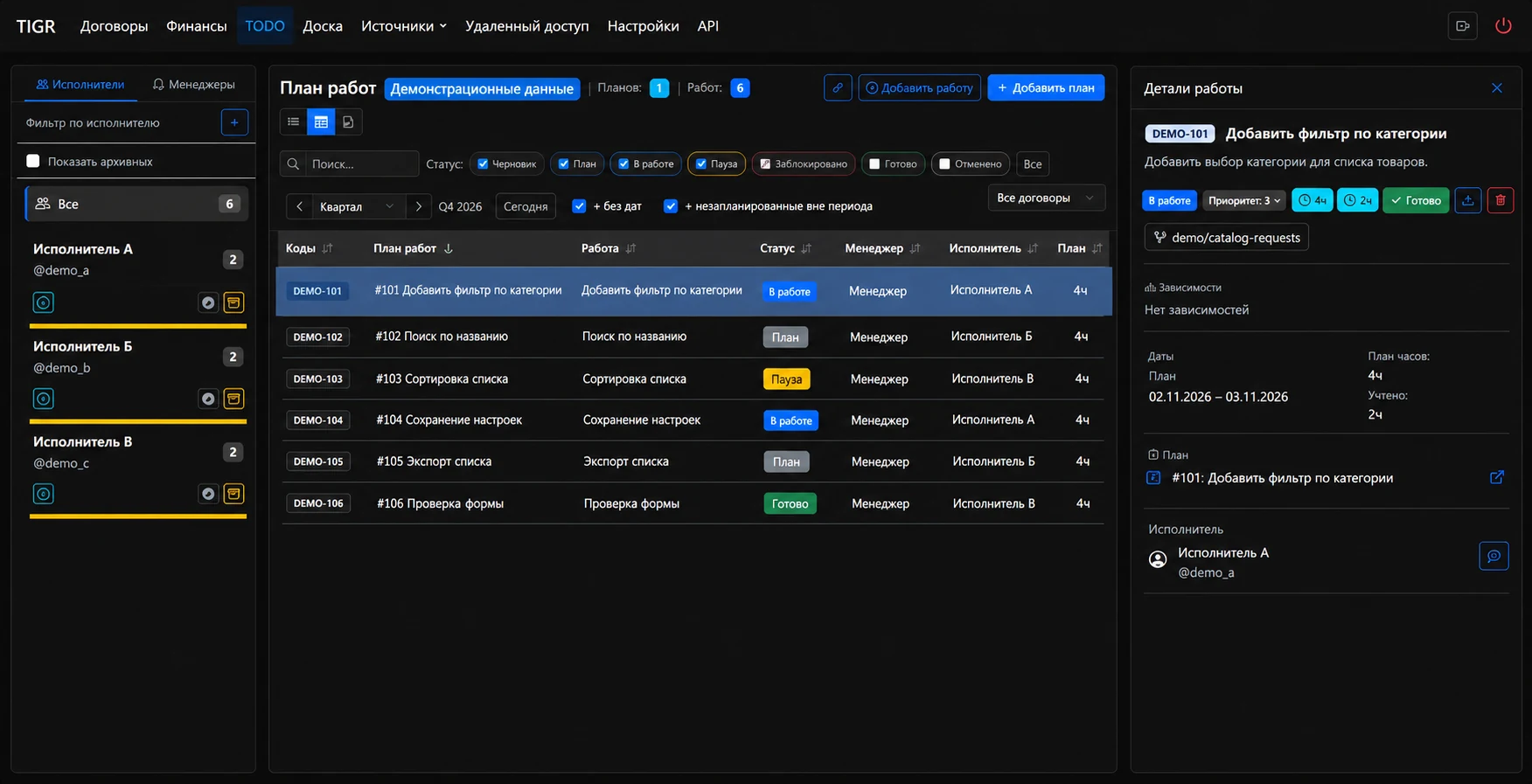
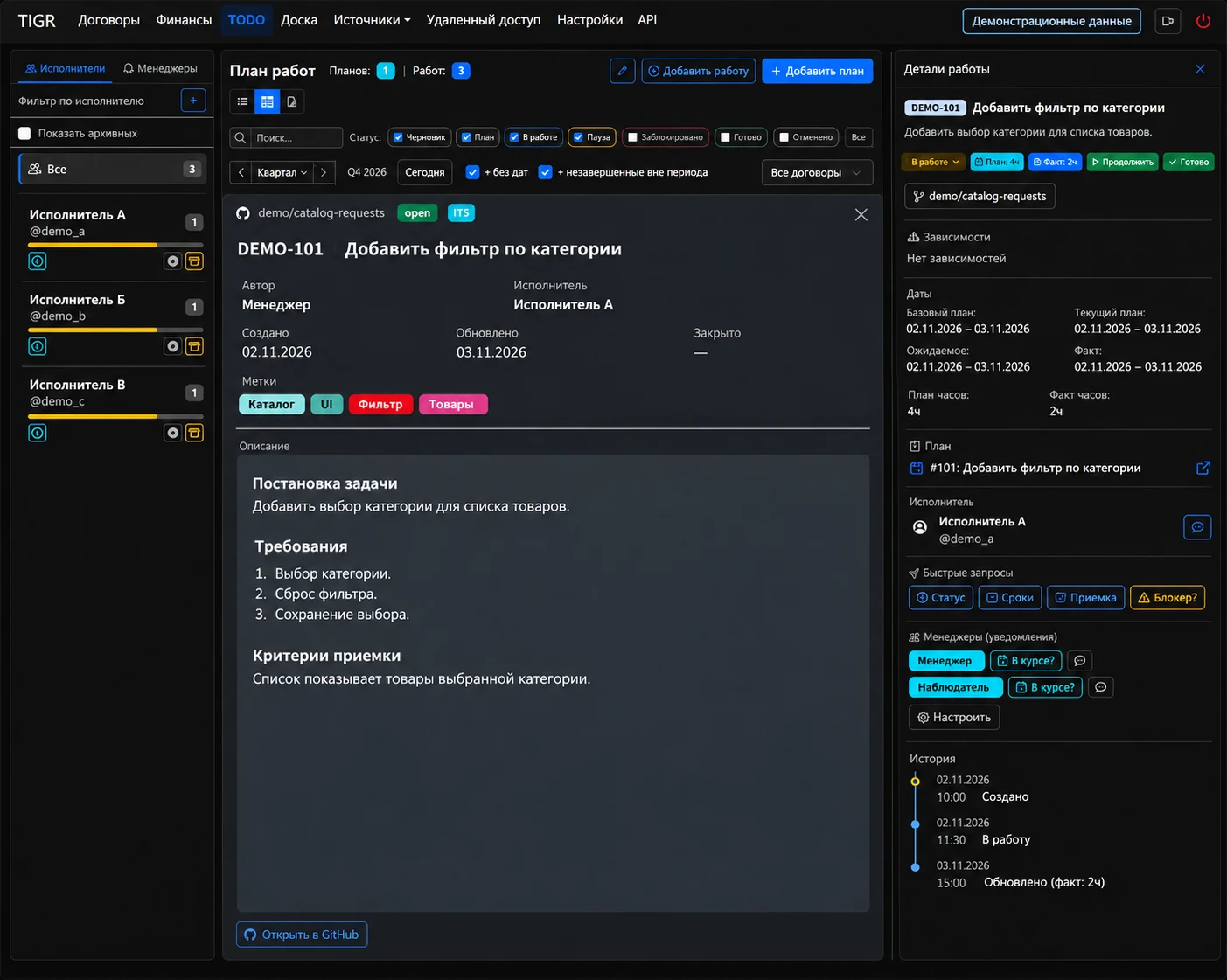
The system preserves the link between a request and the work it generates. The original issue can be opened beside the work card, keeping the specification visible while dates, assignee, status and execution history are considered within the plan. This separates the customer agreement from the organisation of delivery while maintaining their connection.
Telegram interaction developed during February, including requests and replies, notifications and manager roles. Assignees do not need to open the full interface for every routine task action. Personal reports through Telegram followed in March. The messenger and the web interface became two ways to participate in the same workflow.
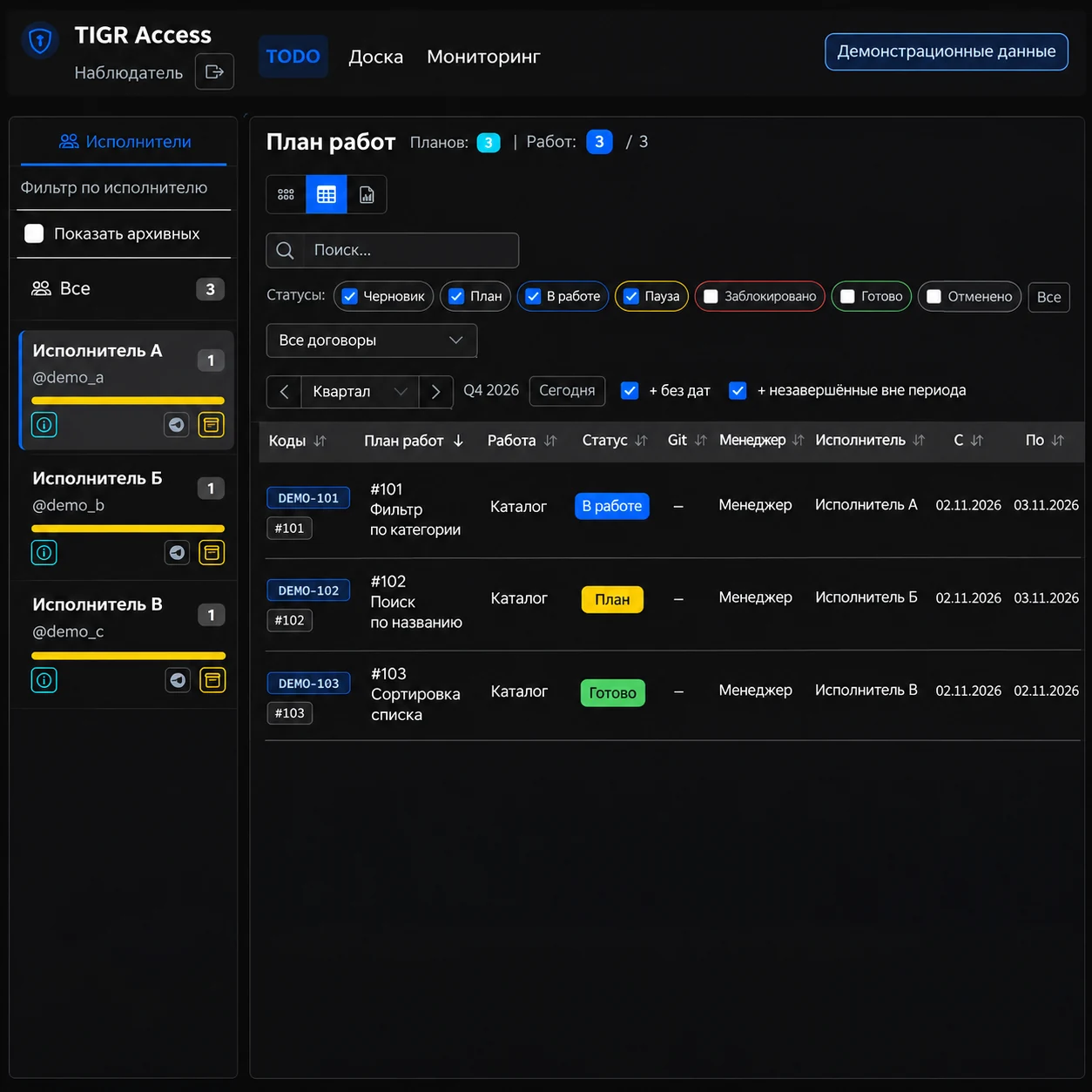
Implementation of a separate restricted remote-access area began in March 2026. The main server retained authority over work and permissions; the remote area exposes permitted views and actions. Restrictions are checked on the server, not merely by hiding buttons. These are different access levels within one system, rather than independent task databases.
By April, development covered workload reports, remote viewing for managers and access auditing. Late-April records already describe changes to a running installation. The development history does not establish its exact first deployment date; by November 2026 TIGR was in continuous team use.
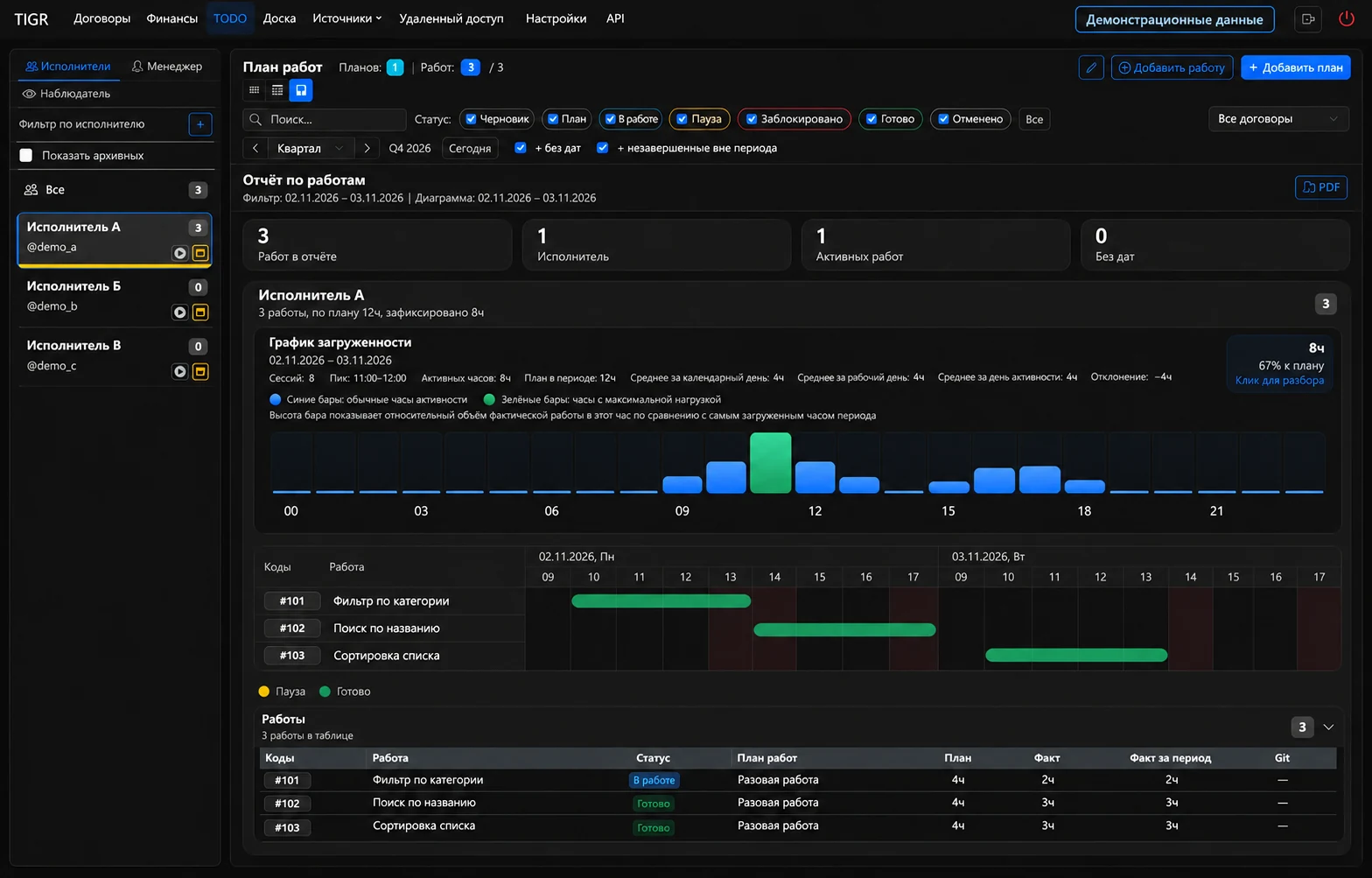
Reports bring together planned and actual dates, recorded time, current states and the history of pauses and resumptions. Managers see the overall picture, while each developer can obtain a report on their own work. These records provide a shared, verifiable basis for discussing schedules, workload and delivery. Hours alone do not measure code quality: conclusions must account for task complexity and the accepted result.
In autumn, attention shifted towards dependable daily operation. October brought stable work identifiers and improvements to reading and posting comments through remote access. GitHub communication remains on the main server. Version 4.4.5, dated 19 October, includes backup of the running database.
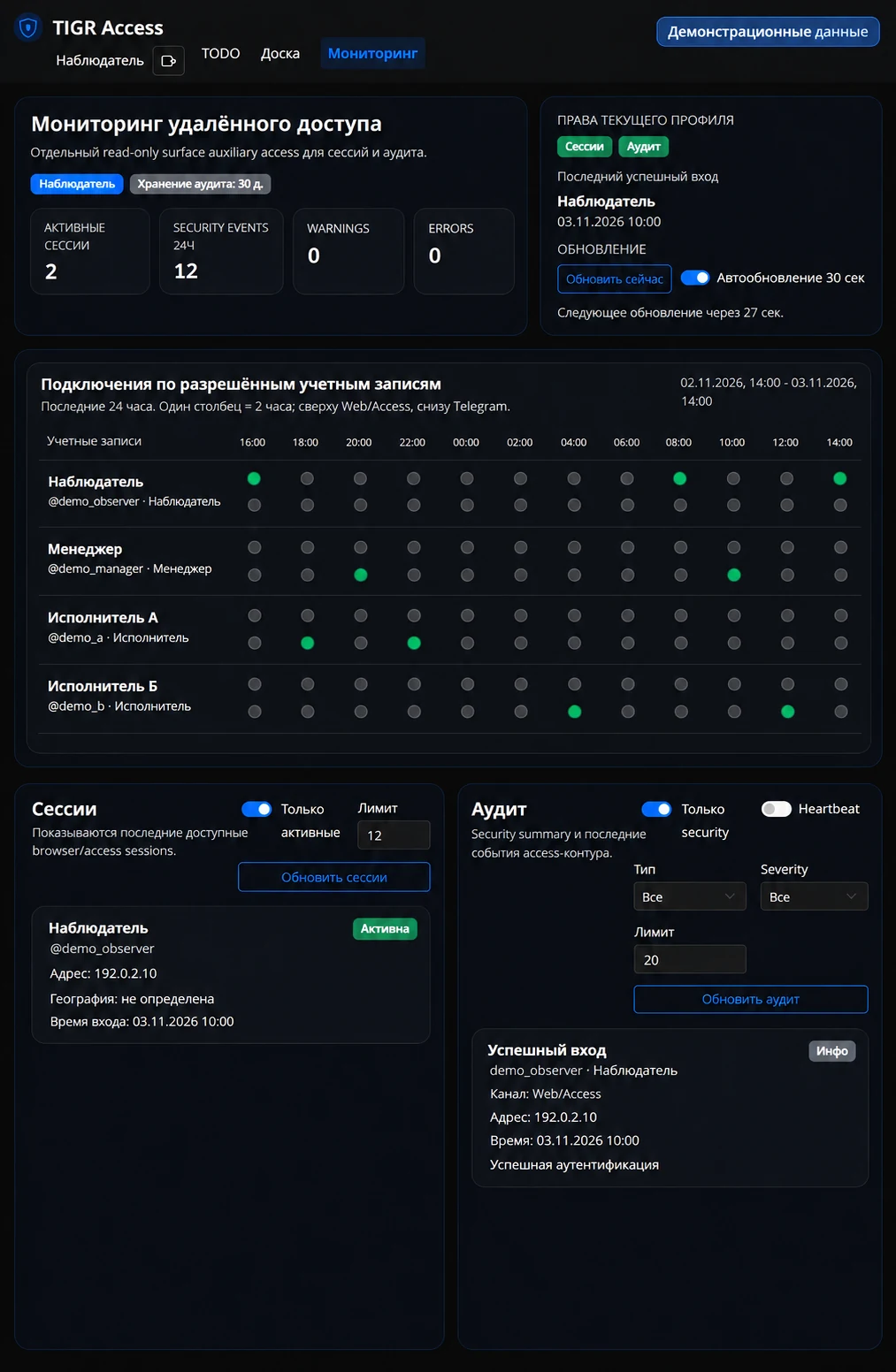
By November, TIGR combines local management, restricted remote access and Telegram. Connection monitoring shows sessions and access events; it addresses access oversight rather than replacing work reports. TIGR remains an internal team tool, without public user registration.
The illustrations are reconstructions based on working interface screenshots, using demonstration data. Names, tasks, repositories, addresses and figures have been replaced. They explain the screen structure and are not exact captures of the running system or reports about real employees.